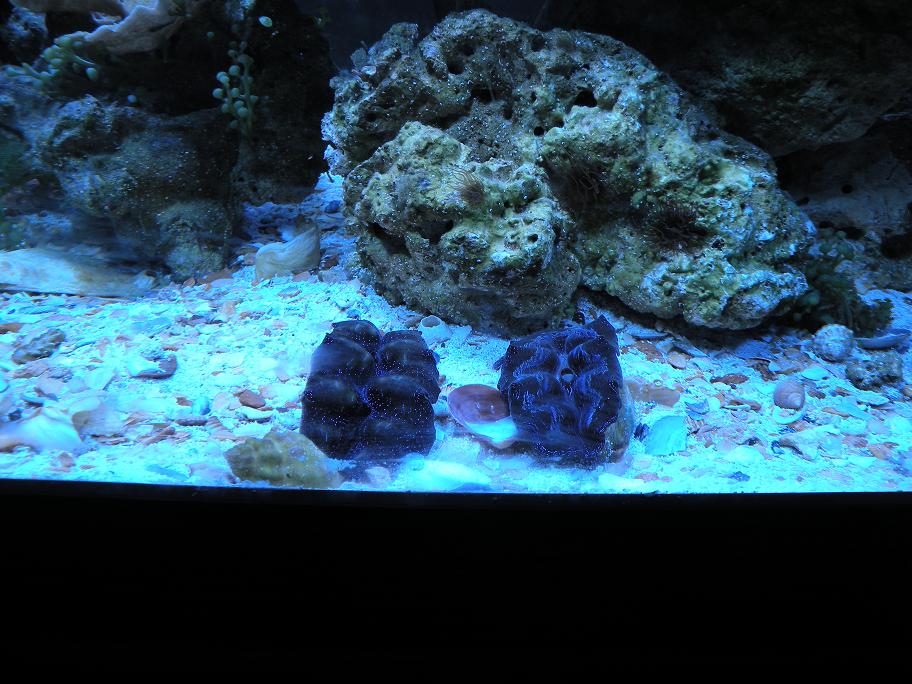

So Ive had two beautiful T. Croceas that I had in the saltwater pond while I added the sump to my tank, however when I went to put them in the tank I noticed something strikingly peculiar. The clams had formed a lip on their shells similar to a T. Maxima. T croceas dont have the lip ridges like T Maximas of course, and this is the first lip layer to appear on the shells. I attempted to scare them closed using the algae scraper revealing their lip.
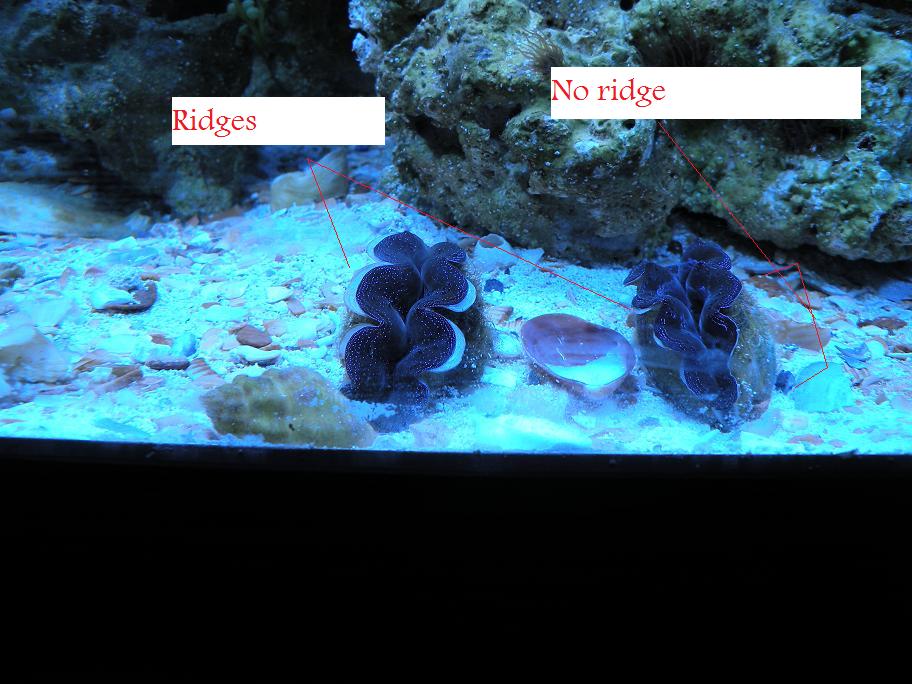
I added notes to the pictures showing how for the first year or two (guessing age of them) there have been no lips formed. Unlike the T.Maxima which forms lips from the get go.
So the question is, are Tridacna clams knowns to do this?
I added notes to the pictures showing how for the first year or two (guessing age of them) there have been no lips formed. Unlike the T.Maxima which forms lips from the get go.
So the question is, are Tridacna clams knowns to do this?