



You are using an out of date browser. It may not display this or other websites correctly.
You should upgrade or use an alternative browser.
You should upgrade or use an alternative browser.
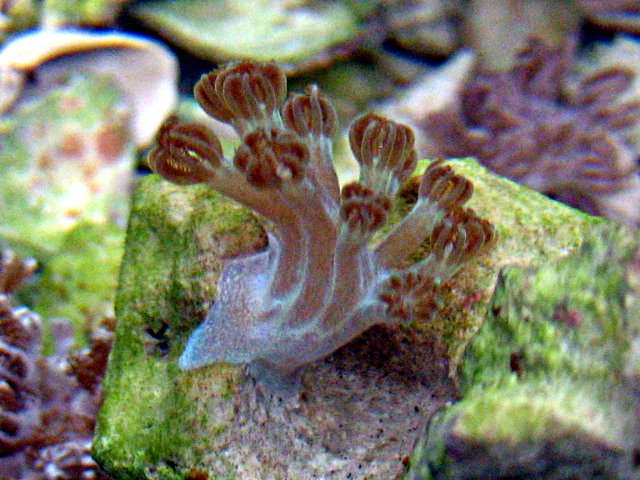
Cespitularia-Blue African Xenia Frag F/S
- Thread starter Pablo
- Start date






- Location
- Forest Hills
 wow, is this rare? i never heard of them be4
Xeniid Corals
Excerpt: For many discriminating reef aquarists, specimens of Cespitularia have been some of the most sought after corals of any kind. The reasons for their allure are many, and among Xeniids they have some of the best of all desirable attributes in the family (re: rarity, color, visage). They have a "look" (morphology) that is distinguished and unique. In gross form they resemble stalked Xenia with a size and structure inclined to grow rather larger than Xenia. To some they are also reminiscent of the zooxanthellate Nephtheid "Tree corals." Their polyps are not restricted to the cap/crown like Xenia, however, but also grow from the stalks of the colony, although these polyps tend to be limited, as a specimen matures, to the upper portions of the colony. Perhaps the most exciting thing about Cespitularia is their remarkable visage. I dare not even say "color," because their overall look is one of translucent and oft-stunning, iridescent quality - making quite an impression on aquarists! New imports and stressed individuals will lack bright color or any significant opalescent quality, but once established under quality lamps or natural sunlight, they take on a remarkable appearance. Much of the excitement is due to the tiny calcareous sclerites, which appear to reflect light and make the coral sparkle or glitter. Colors range from subtle tan and peach hues with green tinged polyps to stellar, solid blue and green colonies. Inspecting Cespitularia in the aquarium at night with a flashlight reveals a metallic silver appearance. Alas, photographs capture very little of the ethereal qualities of these corals and aquarists must see them in the flesh to truly appreciate them. The few fragments that enter the aquarium trade have been cited as hailing from Indonesia or East Africa. The natural range of this genus is very wide, though, throughout the Indo-Pacific and Red Sea, with specimens recorded in both clear and turbid waters. They are further observed to favor shallow and wave-protected environments. In aquaria, provide them with bright light and moderate, random turbulent or surging water flow… avoid laminar water motion.
Excerpt: For many discriminating reef aquarists, specimens of Cespitularia have been some of the most sought after corals of any kind. The reasons for their allure are many, and among Xeniids they have some of the best of all desirable attributes in the family (re: rarity, color, visage). They have a "look" (morphology) that is distinguished and unique. In gross form they resemble stalked Xenia with a size and structure inclined to grow rather larger than Xenia. To some they are also reminiscent of the zooxanthellate Nephtheid "Tree corals." Their polyps are not restricted to the cap/crown like Xenia, however, but also grow from the stalks of the colony, although these polyps tend to be limited, as a specimen matures, to the upper portions of the colony. Perhaps the most exciting thing about Cespitularia is their remarkable visage. I dare not even say "color," because their overall look is one of translucent and oft-stunning, iridescent quality - making quite an impression on aquarists! New imports and stressed individuals will lack bright color or any significant opalescent quality, but once established under quality lamps or natural sunlight, they take on a remarkable appearance. Much of the excitement is due to the tiny calcareous sclerites, which appear to reflect light and make the coral sparkle or glitter. Colors range from subtle tan and peach hues with green tinged polyps to stellar, solid blue and green colonies. Inspecting Cespitularia in the aquarium at night with a flashlight reveals a metallic silver appearance. Alas, photographs capture very little of the ethereal qualities of these corals and aquarists must see them in the flesh to truly appreciate them. The few fragments that enter the aquarium trade have been cited as hailing from Indonesia or East Africa. The natural range of this genus is very wide, though, throughout the Indo-Pacific and Red Sea, with specimens recorded in both clear and turbid waters. They are further observed to favor shallow and wave-protected environments. In aquaria, provide them with bright light and moderate, random turbulent or surging water flow… avoid laminar water motion.
[FONT="]Yes, one of the premium strains of xenias. Slow grower but one of most beatiful soft corals.
[/FONT]
[/FONT]

"Kind words can be short and easy to speak, but their echoes are truly endless"
Mother Teresa
Mother Teresa
PUBLO is a+ seller and a nice guy.

- Location
- Long Island, NY
I have seen this frag and it is stunning. I second Pablo being an asset to the coral community!

Sponsor Reefs
We're a FREE website, and we exist because of hobbyists like YOU who help us run this community.
Click here to sponsor $10: