Great question. H. diphreutes is the "reef safe"* one. H. acuminatus is the non-"reef safe" one.
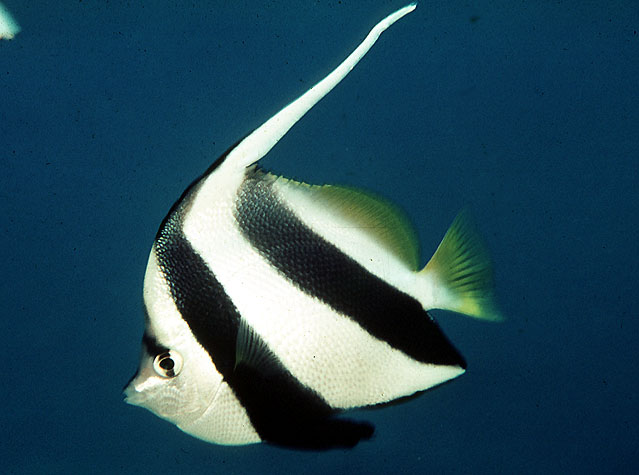
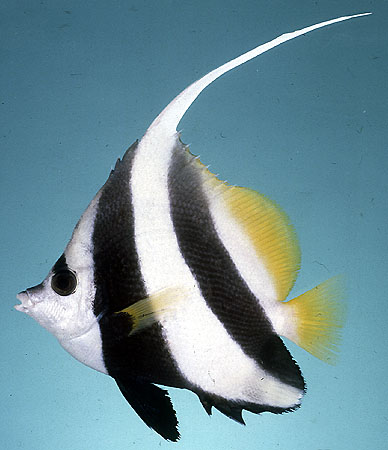
This is H. diphreutes (the reef safe one).
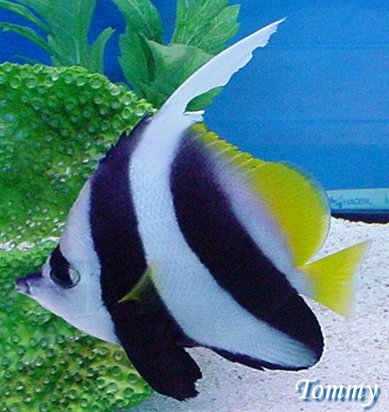
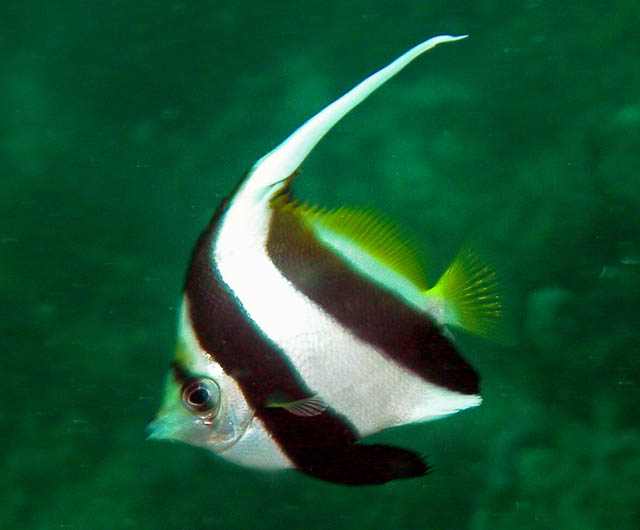
This is H. acuminatus (the NOT reef safe one that marinecenter lists as reef safe).
The most noticeable difference is around the forehead, snout, and breast. See it? In H. acuminatus, the profile of this area is more "pointed" for lack of a better term. In an exaggerated profile, H. diphreutes' head is shaped more like a "{", and H. acuminatus' head is shaped more like a "<".
This is no accident, of course.
Somebody designed the head of H. acuminatus to fit inside tiny crevices for a reason. In the wild H. acuminatus feeds primarily on zooplankton, but it also feeds on things like coral polyps, zoanthids, bristleworms, and algae. You can see the logical extension of this design in such fish as the copper banded and long nosed butterflies as well. In reef aquariums, H. acuminatus tends to pick on hard and soft corals, tubeworms, etc. a bit more than its short snouted brutha.
H. diphreutes diet is entirely zooplanktivorous in the wild. In the reef aquarium, it looks at corals and desirable invertebrates, longs to feed on them, but simply doesn't know how. Most of the time. I have observed one specimen of H. diphreutes snack persistently on a colony of Protopalythoa polyps until it killed all of them, then move onto some zoanthids before it was removed. I suspect that either a) I mis-ID'd the fish, or b) all those fancy books that say it's a reef safe fish are wrong.
Having said all this, both fish are super hardy, easy to group, bold, and peaceful. Just feed them as often as possible.
*I hate the term "reef-safe". No one can agree on a concrete definition of course. Stonefish are "reef-safe" by some definitions. So I like to say "here's the things this fish may or may not eat", then you can decide whether you want those things in your tank or not.
Hope this helps.
Matt
PS. I like to type.