


• Why not take a moment to introduce yourself to our members?

Shalco

Advanced Reefer
Location
Great Neck, NY
Rating - 100%
171   0   0
Hey everyone, thanks for helping out. For the last few weeks I've had some sort of red algae(?) growing in my tank. The first thing I did was put some phosphate remover in my tank (as I didn't have a phosphate test kit at that point) and scrubbed whatever I could off my corals and rocks with a tooth brush, but this stuff will not go away. I've also done a few water changes and that doesn't seem to do anything.

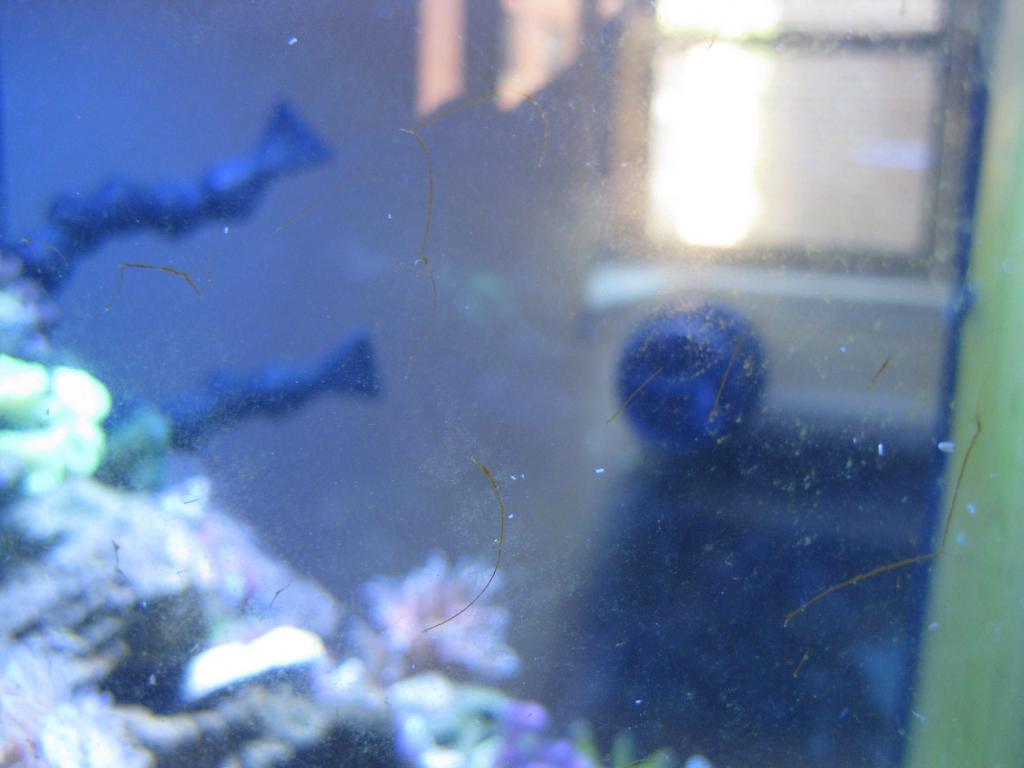
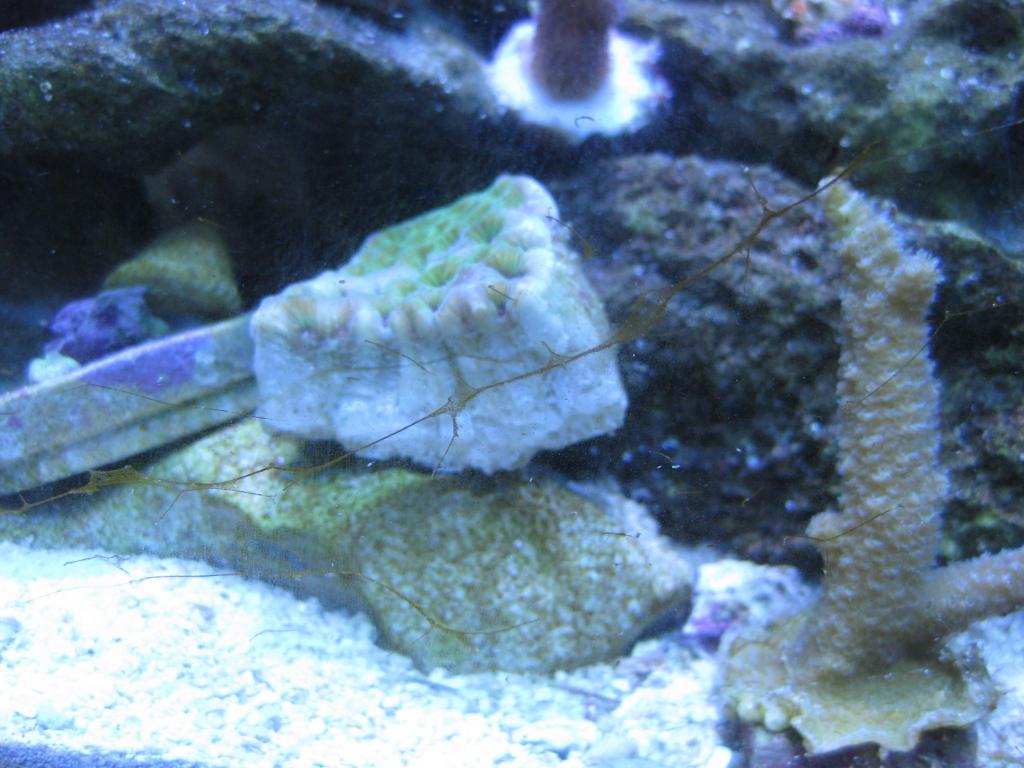
The algae(?) is red and forms these long strands predominately, but also forms kinda spider webs on the rocks as well. There also seems to be little bugs(?) associated with the strands, but I only see those on the glass.

As for my tank. Its a 34 gallon Solana, only bio filtration with approx 50 lbs of LR and 40 lbs of LS. Chaeto in the back as well. Only 1 fish (purple fire fish), decent amount of corals (LPS, SPS, and softies). Approx 10 - 15 snails, and about 5 small hermit crabs.
Salinity: 1.023, pH: 8.4, Ammonia: 0, Nitrates: low (<10), phosphates 0, Calcium 450, Hardness is in normal range.

If anyone can tell me what is going on, and hopefully how to fix it, I would be truly appreciative. Here are a couple pics, the first one is a good look at the algae(?) and the other one you might be able to make out the bugs(?)
 

Attachments

  • IMG_0850.jpg
    IMG_0850.jpg
    92.6 KB · Views: 94
  • IMG_0852.jpg
    IMG_0852.jpg
    56 KB · Views: 91

xxxAngeloxxx

Advanced Reefer
Location
New Jersey
Rating - 100%
121   0   0
I just went threw the same problem. Imo i had my lights off for 1 whole week and the red algea died on me. Thats the best you can do. Do some cleaning also too. Btw is the red algea on the sand too ? Remenber the only way red algea lives on is with the lights beein on all the time.


Additected To MR =D Lol
 

beerfish

Advanced Reefer
Rating - 100%
32   0   0
I just went threw the same problem. Imo i had my lights off for 1 whole week and the red algea died on me. Thats the best you can do. Do some cleaning also too. Btw is the red algea on the sand too ? Remenber the only way red algea lives on is with the lights beein on all the time.


Additected To MR =D Lol

You really shouldn't give advice unless you know the whole story and have more experience. He obviously has corals in the tank which will likely die if he leaves the lights off.
 

ryangrieder

Advanced Reefer
Location
Northern Jersey
Rating - 100%
34   0   0
with coral, the light trick is fine for 3 days. if you have clams, certain anemones, or any non hary corals, 2 days only.

light trick worked for me and worked for everyone else i know. my tank is a full LPS and some sps. 3 days... and magic...
 

Shalco

Advanced Reefer
Location
Great Neck, NY
Rating - 100%
171   0   0
Thanks for the help everyone.

The tank is a relatively new tank. I cycled the rock and sand from March - June and started adding corals around a month ago. I added the fish probably three weeks ago. My water parameters have been good throughout the process, and like I said in the first post, I placed a phosphate remover in my tank when I first noticed it and then got a phosphate test kit a few days later and my levels were zero.

As far as my lighting, I have a Current I think sunpod (bought it used - 150W MH and 96W T5). I have had my light schedule as 12hrs T5s and 5 hrs MH.

I think the "bugs" are probably copepods, I got chaeto from a fellow MR reefer and he said that it was packed with copepods and considering I only have one fish in the tank, that was my suspicion. I've seen flatworms before in a friends tank and these are not flatworms.

I'll try the light trick and hopefully that will work. As far as the cause of the problem, I'm not sure as my phosphates are zero, maybe my light cycle is too long and I will need to lower it. What do everyone keep their light cycles at? Do you leave your T5s on at the same time as the MHs if you're running both? Thanks for your help
 

beerfish

Advanced Reefer
Rating - 100%
32   0   0
You can reduce the T5 time, but the lights out thing doesn't actually solve the problem, it just makes it go away for a little while. Do you know how old the bulbs are, did you replace them when you got the fixture?

If you just added the fish recently, the bacteria in the tank are dealing with a heavier load and need time to adjust to the heavier bioload. (Even one fish can do this in a small tank)

I would continue with the carbon and GFO, do some water changes, and reduce the T5 lighting. Don't put a band aid on the problem, or it will constantly come back to haunt you.
 

Shalco

Advanced Reefer
Location
Great Neck, NY
Rating - 100%
171   0   0
Fish has been in the tank for about 3 weeks, the red algae problem didn't start until a week after he was in the tank.

I was told the T5s were new when I got the light and the MH was supposedly only 3 months old.

I am not running any carbon in the tank, only biological filtration. I just did a 10% water change on Thursday night, and did a 20% change the saturday before that. I'll do another change in a few days, but I don't want to change too much water too quickly on such a young system.

I'm going to try keeping the lights off for 2 days and then cut back the T5s after that.

Any other advice is appreciated, thanks for the help everyone
 

Bryceandmandy

Advanced Reefer
Location
Northern NJ
Rating - 100%
8   0   0
What everyone here needs to understand about red cyanobacteria is that it takes over when there is an excess of nutrients( nitrate, phosphates, silicates, etc). Yes products like chemi-clean and ultralife red slime remover will work briefly but these simply adress the symptoms not the cause. An adequate protein skimmer with maximum fractionation, adequate amounts of flow over the liverock itself, and removing the silt/detritus from wherever it may be is the only way to solve this issue. This excess of nitrogenous waste and poor skimming leads to a large amount of dissolved organic carbon or DOC. The cyano feeds on the DOC and takes over through passive encroachment. Remove what cyano you see as well as waste, silt/detritus and hydro-clean your sand. Kink the hose to lessen theflow so you dont remove the sand. 10-15% waterchanges after the "deep clean" waterchange of around 50% will help lower cocentrations while removing waste( the cause). This is a process, it will take a while to solve fully. Sure you cn turn off the lights or dose but quick fixes arent going to solve anything in the long term.
 

xxxAngeloxxx

Advanced Reefer
Location
New Jersey
Rating - 100%
121   0   0
What everyone here needs to understand about red cyanobacteria is that it takes over when there is an excess of nutrients( nitrate, phosphates, silicates, etc). Yes products like chemi-clean and ultralife red slime remover will work briefly but these simply adress the symptoms not the cause. An adequate protein skimmer with maximum fractionation, adequate amounts of flow over the liverock itself, and removing the silt/detritus from wherever it may be. This excess of nitrogenous waste and poor skimming leads to a large amount of dissolved organic carbon or DOC. The cyano feeds on the DOC and takes over through passive encroachment. Remove what cyano you see as well as waste, silt/detritus and hydro-clean your sand. Kink the hose to lessen theflow so you dont remove the sand. 10-15% waterchanges after the "deep clean" waterchange of around 50% will help lower cocentrations while removing waste( the cause). This is a process, it will take a while to solve fully. Sure you cn turn off the lights or dose but quick fixes arent going to solve anything in the long term.

1+ i agree


Additected To MR =D Lol
 

Bryceandmandy

Advanced Reefer
Location
Northern NJ
Rating - 100%
8   0   0
For effective removal of phosphates and silicates RO is a good way to eliminate it in the beginning but a media reactor with a GFO( granulated ferric oxide) media is ideal for removing what is there in the system. Rowa phos, pura phos-ban, and brightwell extrax phos are all good. Make sure the media is in suspension because these products work by using the entire surface area of the media. The phosphate ionically bonds to the media, the more surface area you have the more PO4 you remove. Lighting is relatively minute in these cases becauase cyano cannot take over simply because there is too much light alone. With an excess of nutrients and old bulbs or bulbs in a spectrum that is too far in the red you may create the ideal set of conditions for this animal.
 

Sponsor Reefs

We're a FREE website, and we exist because of hobbyists like YOU who help us run this community.

Click here to sponsor $10:


Top